
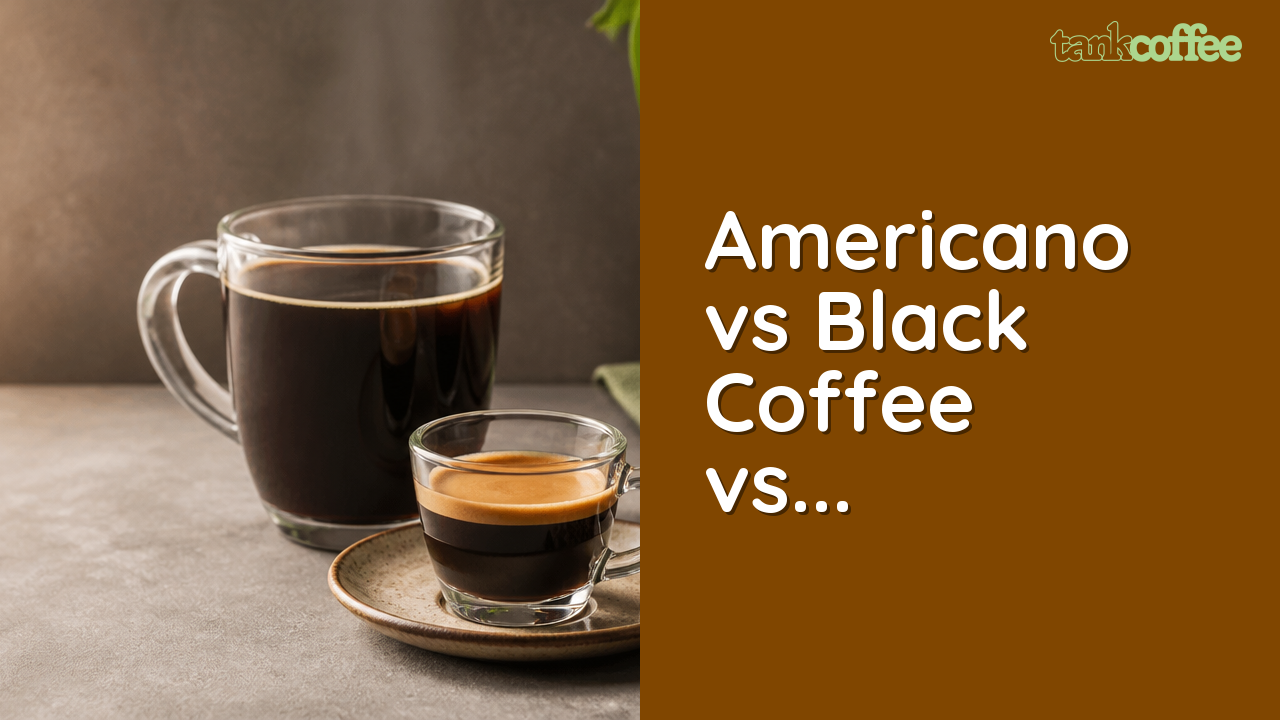
Americano vs Black Coffee vs Espresso: What’s the Difference?
Espresso is a brewing method that forces hot water through finely ground, compacted coffee at approximately 9 bars of pressure over 25 to 30 seconds. An americano is one or two espresso shots diluted with two to four parts hot water. Black coffee is any coffee brewed at atmospheric pressure, such as drip, pour over, or French press, and served without milk or additives.
Espresso is the reference point, an americano is a derivative of espresso, and black coffee belongs to a separate brewing family (per What’s The Difference Between Americano And Filter Coffee?, perfectdailygrind.com). An americano is not a weaker version of brewed coffee, and black coffee is not a diluted espresso.
| Criterion | Espresso | Americano | Black Coffee |
|---|---|---|---|
| What it is | A concentrated coffee shot extracted under pressure | Espresso shots diluted with hot water | Milk-free coffee brewed at atmospheric pressure |
| How it’s made | 9 bars of pressure, 25 to 30 second extraction | 1 to 2 shots plus 2 to 4 parts hot water | Drip, pour over, French press, or similar method |
| Grind | Fine, like caster sugar | Same as espresso, because the base is espresso | Medium to coarse, depending on the brewer |
| Typical serving size | 30ml single, 60ml double (per Brew Ratios and Espresso: A Guide for Your Flair, flairespresso.com) | 180 to 240ml (6 to 8oz) | 240ml (8oz) and up (per Caffeine content for coffee, tea, soda and more, mayoclinic.org) |
| Taste and body | Syrupy, heavy, bitter-sweet, intense | Espresso flavour with a lighter body and softer finish | Clean, bright, origin-forward; French press adds body and sediment |
| Caffeine per typical serving | 40 to 75mg single, 100 to 150mg double (per How much caffeine in an espresso? Single vs double shot, lorespresso.com) | Same as the shots used: roughly 100 to 150mg for a double (per Caffeine in Americano Coffee, caffeineinformer.com) | 95 to 140mg per 8oz mug. Typical published figures; verify with the relevant authority before relying on them. |
| Caffeine per ml | Roughly 2mg per ml. Typical published figures; verify with the relevant authority before relying on them. | Roughly 0.5 to 0.7mg per ml, depending on dilution. Typical published figures; verify with the relevant authority before relying on them. | Roughly 0.4 to 0.6mg per ml. Typical published figures; verify with the relevant authority before relying on them. |
| Equipment required | Espresso machine with a grinder | Espresso machine, or a moka pot as a budget workaround | Kettle plus dripper, French press, or batch brewer |
| Skill and effort | High: dialing-in, timing, tamping | High if you pull the shots yourself; low at a café | Low to moderate, mostly grind size and timing |
| Cost to start | £300 plus for a machine and grinder. Typical published figures; verify with the relevant authority before relying on them. | £300 plus with espresso gear; £30 to £50 with a moka pot. Typical published figures; verify with the relevant authority before relying on them. | £40 to £150 for a brewer and a decent burr grinder. Typical published figures; verify with the relevant authority before relying on them. |
| Best for | Intense flavour, short servings, milk-drink bases | Espresso drinkers who want a longer cup, hot or iced | Volume, clarity of origin, low cost per cup, multiple refills |
| Worst fit | Anyone wanting a long, leisurely mug or low tinkering | Anyone without espresso access and who wants maximum brightness | Anyone wanting crema, syrupy body, or a latte flat white base |
Black coffee suits those who drink a full mug or several over a morning. Espresso is for those who want concentration and are willing to pay for the equipment or café price of a short shot. Americano is for those who like espresso’s underlying flavour but want the ritual and volume of a longer drink.
Caffeine, Taste, and Extraction: The Technical Differences
The technical difference lies in the ratio of coffee solids to water and the method of extraction. A double espresso carries roughly 100 to 150mg of caffeine in about 60ml, while an 8oz mug of black drip coffee carries roughly 95 to 140mg. Typical published figures; verify with the relevant authority before relying on them. The shot tastes stronger, but the mug often delivers more total caffeine. An americano’s caffeine content is identical to the espresso shots it contains because dilution changes strength, not caffeine volume. Typical published figures; verify with the relevant authority before relying on them.
Caffeine per serving and per ml
Caffeine concentration is the measure of caffeine mass relative to the volume of the beverage.
| Drink | Typical serving | Total caffeine | Caffeine per ml |
|---|---|---|---|
| Espresso, single | 30ml | 40 to 75mg | About 2mg per ml |
| Espresso, double | 60ml | 100 to 150mg | About 2mg per ml |
| Americano with a double shot | 180 to 240ml | 100 to 150mg | 0.5 to 0.7mg per ml |
| Black drip coffee | 240ml (8oz) | 95 to 140mg | 0.4 to 0.6mg per ml |
| French press coffee | 240ml (8oz) | 80 to 130mg | 0.3 to 0.5mg per ml. Typical published figures; verify with the relevant authority before relying on them. |
Strength refers to both taste and chemical concentration. Espresso contains roughly 8 to 12% dissolved coffee solids (TDS), while filter coffee sits around 1.2 to 1.5%. Typical published figures; verify with the relevant authority before relying on them. This creates the thick, coating mouthfeel of espresso and ensures an americano remains rounder than a drip coffee.
Crema is an emulsion of coffee oils and carbon dioxide created by 9 bars of pressure. Typical published figures; verify with the relevant authority before relying on them. An americano starts with this crema, but the addition of hot water breaks it down, resulting in a flatter appearance. Typical published figures; verify with the relevant authority before relying on them.
Taste and body by drink
Taste and body are the sensory results of extraction method, roast profile, and dilution.
| Drink | Acidity | Body | Dominant notes | Aftertaste |
|---|---|---|---|---|
| Espresso | Medium to low | Heavy, syrupy | Chocolate, caramel, dark fruit | Lingering, bitter-sweet |
| Americano | Medium | Medium, lighter than espresso | Similar to the shot, slightly muted | Cleaner, shorter |
| Black coffee, drip or pour over | High to medium | Light to clean | Bright, floral, citrus, origin-led | Crisp, tea-like |
| Black coffee, French press | Medium | Heavy, textured | Full, earthy, with fine sediment | Coating |
Why They Taste Different: Pressure vs Gravity Extraction
Pressure extraction is a process that uses force to produce a small volume of coffee with a high concentration of oils and bitter compounds. Gravity and immersion brewing extract more slowly, resulting in lower dissolved solids, clearer acidity, and more expressive origin notes.
A light-roasted Ethiopian coffee, typically sourced from single-origin beans, often tastes floral as a pour over but can become sour and harsh when forced through a portafilter at 9 bars. Typical published figures; verify with the relevant authority before relying on them.
Long Black vs Americano: The Ordering Difference That Matters
A long black is a beverage made by adding espresso to hot water, whereas an americano is made by adding hot water to espresso. Pouring the shot into water preserves more crema and a stronger flavour seal, giving the long black a firmer mouthfeel. Adding water to the shot breaks the crema and creates a softer finish. Typical published figures; verify with the relevant authority before relying on them.
Ristretto and lungo are variations of espresso. A ristretto uses less water (1:1 to 1:1.5) for a sweeter, concentrated shot. Typical published figures; verify with the relevant authority before relying on them. A lungo uses more water (1:3) for a longer extraction that adds bitterness. Typical published figures; verify with the relevant authority before relying on them. Neither is an americano because neither is diluted after brewing. Typical published figures; verify with the relevant authority before relying on them.
Why Your Homemade Version Tastes Wrong (Bitter, Sour, or Weak)
Homemade coffee failures are the result of stale beans, incorrect grind size, poor water temperature, or a mismatched shot ratio.
Sour espresso indicates under-extraction caused by a coarse grind, cool water, or using a light filter roast. Typical published figures; verify with the relevant authority before relying on them. Bitter espresso or americanos usually result from over-extraction due to a grind that is too fine, water that is too hot, or stale beans. Typical published figures; verify with the relevant authority before relying on them. Weak drip coffee and watery americanos are usually dosing and grind errors. Typical published figures; verify with the relevant authority before relying on them.
How to Choose: Which Drink Fits Your Taste, Budget, and Setup
Drink selection is based on a combination of desired volume, flavour intensity, and available equipment. Black coffee is the choice for volume and low equipment cost. Espresso is the choice for maximum intensity or as a base for milk drinks. Americano is the choice for those who want espresso flavour in a larger mug.
Black coffee
Black coffee is a brewed beverage served without milk or sugar.
Choose this if: you drink multiple cups, prefer clarity of flavour, want the lowest equipment cost, or brew for several people.
Skip this if: you want crema, heavy body, or a base for lattes and cappuccinos.
Espresso
Espresso is a highly concentrated coffee shot produced under high pressure.
Choose this if: you want concentrated flavour, intend to make espresso-based milk drinks, or enjoy the technical process of dialing in grind and dose.
Skip this if: your budget cannot cover a proper grinder and machine, or if you prefer a drink you can sip for half an hour.
Americano
An americano is a drink consisting of espresso shots diluted with hot water.
Choose this if: you own espresso equipment and want a longer serving, prefer iced americano variations for strong coffee flavour, or want a mid-point between a shot and a drip mug.
Skip this if: you have no espresso equipment and want the brightest, most origin-forward cup.
Buying scenarios
Buying scenarios are the practical applications of choosing a brewing method based on user needs.
- First setup on a budget: use a French press or pour-over dripper and learn how a burr grinder works to ensure high-quality black coffee at a low entry cost.
- Espresso machine owner wanting a longer cup: make an americano with a double shot and hot water, using a medium-dark roast to maintain body.
- Milk-drink ambitions: purchase an espresso machine and burr grinder together to ensure consistency.
- Office or multi-cup household: a batch brewer or large French press provides the lowest per-cup cost and serves multiple people efficiently.
Bean and roast mapping
Bean and roast mapping is the process of matching the coffee roast profile to the specific brewing method for optimal taste.
| Drink | Roast style that works | What it tastes like | What goes wrong if you mismatch |
|---|---|---|---|
| Espresso | Espresso roast: darker, well-developed | Chocolate, caramel, full body | Light filter roasts turn sour and sharp |
| Americano | Espresso roast or medium cocoa notes | Rich body that survives dilution | Thin roasts taste watery and acidic |
| Black coffee, drip or pour over | Filter roast: lighter, origin-forward | Floral, citrus, tea-like, clean | Heavy espresso roasts taste flat and smoky |
| Black coffee, French press | Medium to medium-dark roast | Earthy, full, textured | Very light roasts become vegetal or muddy |
Espresso roast is a profile chosen for solubility and body under pressure, not a botanical species. Typical published figures; verify with the relevant authority before relying on them. While any bean can be brewed as drip coffee, including blonde espresso options, dark espresso roasts lack the delicate origin notes of filter roasts.
Common beginner mistakes
Beginner mistakes are frequent errors made by new coffee enthusiasts regarding equipment, beans, and technique.
- Assuming a larger cup contains more caffeine.
- Buying an espresso machine without a dedicated burr grinder.
- Using light single-origin filter roasts for espresso.
- Pouring boiling water directly over a shot; use water at 95 to 96°C. Typical published figures; verify with the relevant authority before relying on them.
- Struggling with tamping your espresso and expecting espresso-roast beans to behave like filter beans in a drip machine.
Frequently Asked Questions
Is an americano just watered-down espresso?
Yes. It consists of espresso shots diluted with hot water to trade intensity for volume while maintaining the espresso flavour profile and caffeine content. Typical published figures; verify with the relevant authority before relying on them.
Is an americano the same as black coffee?
No. An americano is diluted espresso, whereas black coffee is brewed via drip, pour over, or immersion. For a deeper look, see the comparison of americano vs filter coffee, as the extraction methods produce different tastes.
Which has more caffeine: espresso, americano, or black coffee?
A double espresso and a double-shot americano both contain roughly 100 to 150mg. An 8oz drip coffee contains 95 to 140mg. Espresso is more concentrated, but a full mug of black coffee often has more total caffeine. Typical published figures; verify with the relevant authority before relying on them.
Does adding water to espresso reduce the caffeine?
No. Dilution changes volume and strength, but the total amount of caffeine extracted in the shot remains the same. Typical published figures; verify with the relevant authority before relying on them.
Is espresso a type of bean or a roast?
Neither. Espresso is a brewing method. Espresso roast refers to a profile designed to extract well under pressure. Typical published figures; verify with the relevant authority before relying on them.
Can I make an americano without an espresso machine?
Yes. Use a moka pot and add hot water. This results in a drink with less body and no true crema. Typical published figures; verify with the relevant authority before relying on them.
What ratio of espresso to water makes an americano?
The standard is 1 part espresso to 2 to 4 parts hot water. Typical published figures; verify with the relevant authority before relying on them.
Is moka pot coffee the same as espresso?
No. Moka pots brew at 1 to 2 bars of pressure, whereas espresso requires 9 bars to create the characteristic crema and syrupy body. Typical published figures; verify with the relevant authority before relying on them.
Do I need special “espresso beans” to make espresso or americano at home?
No, but roast profile matters. Developed roasts with chocolate or caramel notes work best; light filter roasts often taste sharp under pressure. Typical published figures; verify with the relevant authority before relying on them.
Which is cheapest to make at home: black coffee, americano, or espresso?
Black coffee is the cheapest due to lower equipment costs and higher yield per bag of beans. Typical published figures; verify with the relevant authority before relying on them.
Is an espresso machine worth it if I only drink black coffee?
Only if you want straight shots or americanos. For standard black coffee, drip and pour-over brewers offer better value and flavour. Typical published figures; verify with the relevant authority before relying on them.
Why does my homemade americano taste bitter or weak?
This is usually due to stale beans, incorrect shot ratios, or overheating the water. Typical published figures; verify with the relevant authority before relying on them.
Which should I order at a café if I usually drink drip coffee?
Order batch brew or an americano. An americano will be richer and less bright than drip coffee. Typical published figures; verify with the relevant authority before relying on them.
Is an americano healthier than black coffee?
There is no meaningful difference. Both contain roughly 2 to 5 calories when served black. Typical published figures; verify with the relevant authority before relying on them.
Further Reading
A selection of official sources on this topic: